

There are photographic playgrounds that feel unlike anything else. The Camargue is one of them. With its mirror-like lagoons, reeds trembling in the evening breeze, wild wind-beaten beaches, and vineyard estates bathed in gold, this land between Nîmes, Arles, and Montpellier is a constant invitation to see differently. But wedding photography in the Camargue is also a true dialogue with a light that is capricious, generous, and sometimes unforgiving.
When a couple chooses me to photograph their outdoor wedding in the South of France, the very first thing I do is not prepare my gear. It’s studying the light. The time of day, the season, the forecast, the orientation of the venue. Because in the Camargue, light is not something you simply endure. It must be read, anticipated, tamed. And once you know how to read it, it becomes the most beautiful ally you could hope for.
Midday light: a challenge worth embracing
Let’s be honest: the blazing 1 p.m. sun in July in the Gard or the Camargue is not the dream scenario for a lifestyle wedding photographer. Shadows are harsh. The sky turns white. Faces suffer. And yet, this is often the exact moment when the ceremony, cocktail hour, and group photos happen. Denying reality is not an option. Learning to work with it is.
Seeking shade as a resource, not an escape
My first response to overhead sunlight is to map out the shaded areas of the venue long before the wedding day. The inside of a barn in Mas-Thibert, the shelter of an old plane tree on a vineyard estate between Lunel and Vauvert, the shade cast by the white walls of a manade… These pockets of soft light are true natural studios. I bring the couple there for a few stolen minutes between dinner and the festivities, and that’s often where the most intimate images are born: the moments where the two of them reconnect, away from the noise, wrapped in flattering, gentle light.
Intentional backlighting: turning constraint into creative choice
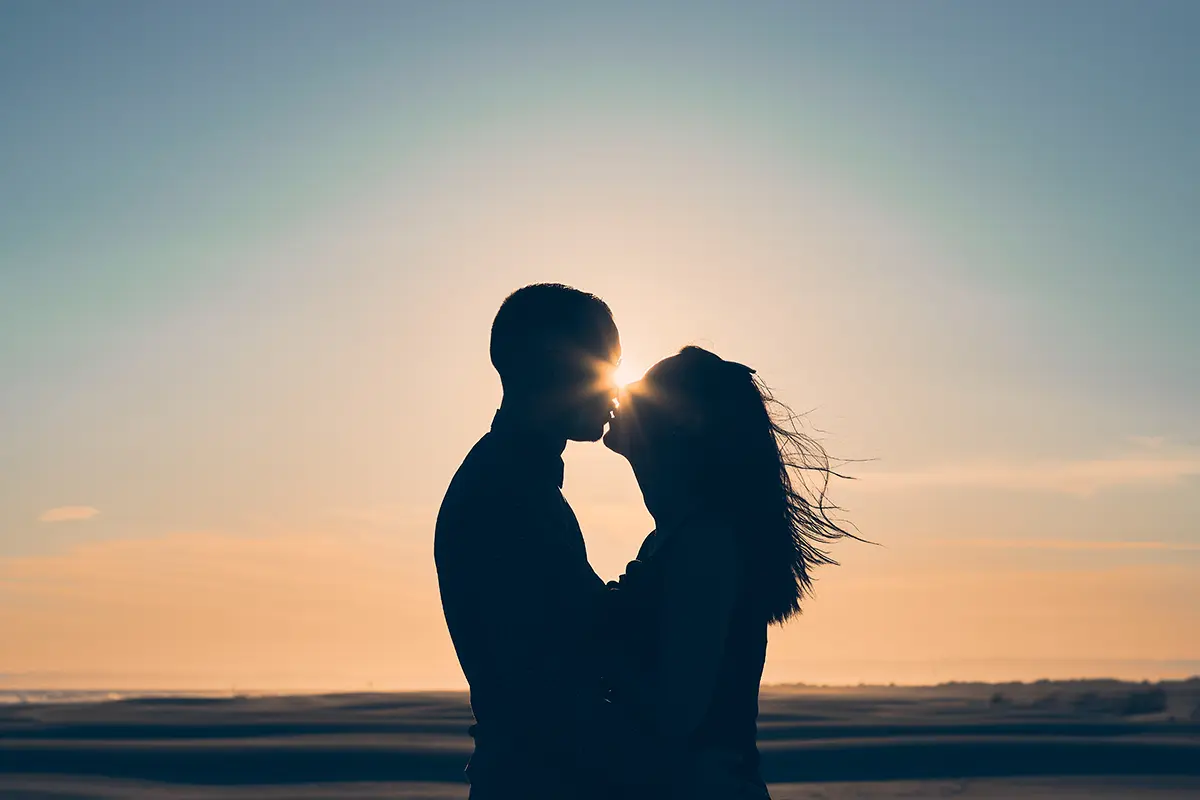
The other technique I particularly love in moments of strong light is deliberate backlighting. Placing my subjects between myself and the sun, slightly underexposing the background, and letting the light draw a golden outline around their silhouettes. The result becomes graphic, timeless, almost editorial. It’s not the naturalistic documentary approach I usually favor, but in certain settings — a wild Camargue beach, a lagoon late in the morning — this method creates images couples still remember years later.
"Midday light in the Camargue is not an enemy. It’s a raw material, like clay for a sculptor. It requires more effort, but the shapes you create from it carry a unique strength."
Practical note for couples
If your wedding takes place in the Camargue during summer, I systematically recommend scheduling your couple session either early in the morning (before 10 a.m.) or late in the afternoon (after 6:30 p.m.). Not because midday light is impossible to work with — it isn’t — but because golden hour offers something the middle of the day simply cannot match. Coordinating the schedule with your venue in advance can completely transform your images.
Golden hour in the Camargue: when light becomes a character
There are moments during a wedding reportage when I feel everything align. Golden hour in the Camargue is almost always one of them. This 45-to-90-minute window before sunset literally transforms the landscape. The grass of the salt marshes takes on golden reflections. Flamingos, when conditions align, become pink silhouettes against a slowly burning sky. The lagoon water shimmers like precious metal. And people’s faces, freed from the aggression of harsh sunlight, reveal something deeply human.
Reading low-angle light to enhance textures
What evening sidelight does to the landscapes of the Camargue feels almost irrational. It reveals textures. The grain of white horses against reeds. The folds of an old stone wall in a manade. The fabric of a drifting dress. As a lifestyle wedding photographer in this region, I’ve learned to search for those angles where the light cuts diagonally, catches details, and creates a depth that frontal light can never produce.
During the couple session, I guide very little. I prefer to observe. I suggest a direction, create a situation — “walk toward the reeds,” “look at the water” — and let the couple simply exist. Golden hour does the rest. It stretches shadows poetically, wrapping the silhouettes in a warmth visible even in their eyes. At that point, I’m not the one creating the photograph. The light is. I’m simply there to catch it.
A visual language unique to the Camargue
What sets a wedding photographed in the Camargue apart is not just the beauty of the scenery. It’s the identity of the light itself. It is warm, amber-toned, slightly wild. It doesn’t have the cool sophistication of Brittany’s coastline nor the harsh white intensity of certain Mediterranean shores. It carries something generous and honest that perfectly matches what I seek in my work: truthful images, unvarnished, telling a story with sincerity.
Three settings, three approaches: manade, vineyard estate, wild beach
The manade: raw light serving authenticity
A manade is a world of its own. The earth is dry and cracked. The gardians move through it on horseback. Camargue horses, with their immaculate white coats, capture every variation of light like natural reflective surfaces. Photographing a wedding in a manade means constantly composing with reflected light, which can be magnificent — a white horse acting like a natural mirror — or delicate to control when the sun stands overhead.
In these environments, I often work with slight controlled overexposure to preserve detail in the highlights. I search for fleeting moments: a horse passing behind the couple, creating a soft blur in the background. A gardian riding away in the distance, silhouetted against the light. The shadow of a stable dividing the scene in two, with the couple standing exactly on the edge between light and darkness. These moments cannot be staged. They must be captured.
The vineyard estate: light filtered through the vines
Between Lunel, Nîmes, and Petite Camargue, vineyard estates offer something rare when it comes to light: a natural filter. Rows of vines create alternating corridors of shadow and light that are absolutely perfect for portraits in the middle of the day. I place my subjects along the line of a row, with sunlight brushing the leaves on each side. The light stays soft in the center, intense and golden around the edges. It feels cinematic, almost effortlessly.
At sunset, the vineyards take on shades reminiscent of classical paintings. Yellow, ochre, russet depending on the season. If the wedding takes place in September or October — a period I particularly love for weddings in the region — vineyards during or just after harvest offer an incredible richness of color that does much of the photographic work for you. My role then is not to overdo it. To let the image breathe. To keep it simple so the light can speak.
The wild beach: open air and uncompromising light
The wild beaches of the Camargue — between Saintes-Maries-de-la-Mer and Pointe de l’Espiguette — are incomparable yet demanding playgrounds. The sand reflects light. The wind moves hair and veils. The sky, when clear, amplifies every contrast. Here more than anywhere else, preparation is essential.
I ideally arrive on these beaches an hour before sunset. I scout the areas where the low-angle light will hit first, where the water will turn red, where the dunes will take on that almost magical hue. Then I guide the couple naturally, as if on a walk, through conversation, without artificial posing. The best beach photographs are not made facing the camera. They are created from behind, from the side, in movement, in bursts of laughter, in quiet shared silences that only the vastness of the landscape can inspire.
"What I love about the Camargue is that the light forces honesty. There’s nowhere to hide. Not for me, not for my subjects. And that is exactly where real images are born."
My approach: natural light, genuine emotions, candid moments
I don’t believe in over-polished wedding photographs. I don’t believe in staged poses, forced smiles, or overly perfect settings. What I look for — whether during a wedding in the Gard, Arles, the Camargue, or on the beaches of the Hérault coast — are the moments that don’t realize they’re being watched. The way a bride rests her head on her partner’s shoulder between dances. The burst of laughter during the couple session because the wind just caught the veil. The glance exchanged at the table when nobody else is looking.
My method is that of a street photographer adapted to the world of weddings. Stay discreet. Blend into the setting. Be present, always, without ever imposing myself. And when the light arrives — that distinctive Camargue light, amber-toned, alive, slightly untamed — it does the work. I simply press the shutter at the right moment.
This philosophy guides every outdoor wedding reportage in the South of France: for me, being a Camargue wedding photographer does not simply mean “taking photos in the Camargue.” It means understanding this land, respecting its light, and placing it at the service of every couple’s unique story.
Your wedding in the Camargue deserves light worthy of it
If you are planning an outdoor wedding in the South of France — in the Camargue, the Gard, around Arles, or between Nîmes and Montpellier — the question of light is probably one of the most important you can ask yourself. Not because it is complicated, but because it is central. It will define the atmosphere of your images for decades to come.
If you recognize yourself in this vision of wedding photography — sensitive, documentary-driven, rooted in reality and emotion — I would be happy to discuss it with you. Not to sell you a package, but to understand the story you want to tell and see whether our sensibilities align.
Your story deserves light that feels like you. Let’s talk about your wedding in the Camargue.